Breathing technique · yoga (pranayama)
Alternate nostril breathing
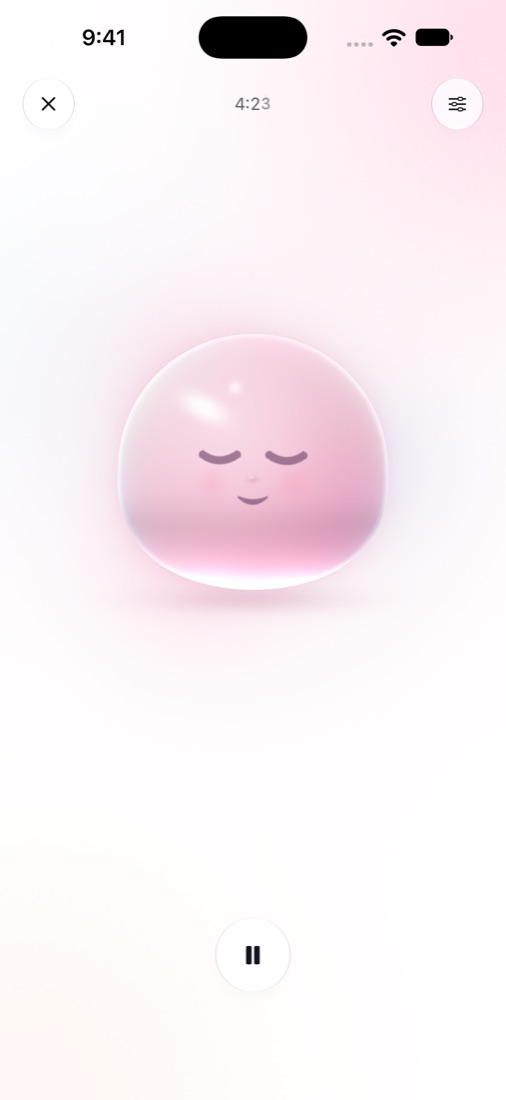
Close your right nostril with your thumb and breathe in through the left for 4. Close the left, breathe out through the right for 6. In through the right, out through the left. That's one round. It's a slow, side-to-side yoga breath many people use to gather their attention. The orb tells you which side.
- 4 in · 6 out
- 5 minutes
- Sitting upright

Notice your shoulders, your jaw, your breath. In Ephling a calm voice keeps the count and a soft pulse marks each change, so you can do this with your eyes closed, in the dark.
Coming soon to the App StoreIn short
- Alternate nostril breathing: in left, out right, in right, out left, closing one nostril at a time with your thumb and ring finger.
- In for about 4, out for about 6, no holds; 5 minutes, sitting upright.
- Called nadi shodhana in yoga. Skip it when your nose is blocked.
How to do it
Sit upright. Rest your left hand in your lap. Lift your right hand: you'll use the thumb for the right nostril and the ring finger for the left.
- Close the right, breathe in leftBreathe inGently close your right nostril with your thumb. Breathe in through the left for 4.
- Switch, breathe out rightBreathe outClose the left with your ring finger, release the thumb, breathe out through the right for 6.
- Breathe in rightBreathe inKeep the left closed and breathe in through the right for 4.
- Switch, breathe out leftBreathe outClose the right with your thumb, release the left, breathe out through the left for 6.
- Keep goingThat's one round. Continue for about five minutes, then rest your hand and breathe normally.
Alternate Nostril (Nadi Shodhana)Premium5 min · suggested when you tap “Need to focus”SoonPart of the 14-day “Pranayama Foundations” programme too.
Tips
- Touch lightly. Just enough to close the nostril; no pressing.
- Keep your elbow down. Let your arm relax against your body so it doesn't tire.
- Hand getting tired? Rest it and imagine the switching for a round or two.
Where it comes from
Nadi shodhana is one of the classic breathing practices of yoga (pranayama). The name is usually translated as “cleaning the channels”. A longer form with a hold, anulom vilom, comes later; start with the simple form here.
How it compares
| Technique | Rhythm | Best moment | In Ephling |
|---|---|---|---|
| 4-7-8 | 4 in · 7 hold · 8 out | In bed, winding down | Premium |
| Box breathing | 4 · 4 · 4 · 4 | Before a big moment, to focus | Premium |
| Long exhale | 4 in · 7 out | Any time; no hold | Free |
| Cyclic sighing | 2 in + a sip · long out | Stressed, tense, on edge | Free |
| Belly breathing | 4 in · 6 out, into the belly | The base for every technique | Free |
| Physiological sigh | 2 in + a sip · long out, ×3 | A 30-second reset | Free |
| Alternate nostril | 4 in · 6 out, side to side | To gather your attention | Premium |
| Resonance breathing | 4.5 in · 5.5 out | Daily practice, 5 minutes | Free |
In the app
What Ephling adds
What the research says
Evidence: Limited
There are few good studies of alternate nostril breathing itself. Its slow pace and long breath out put it among the slow-breathing patterns that research links with more relaxation.
Limited: little direct research on this exact pattern; it rests on what is known about slow breathing in general.
- Zaccaro A et al. How breath-control can change your life: a systematic review on psycho-physiological correlates of slow breathing. Front Hum Neurosci. 2018;12:353.
Before you start
Skip it when you have a cold or a blocked nose; breathe through both nostrils instead. This version has no holds; longer forms with holds aren't for you if you're pregnant or have high blood pressure or a heart condition.
Ephling is a wellness app, not a medical device.
Questions people ask
What is alternate nostril breathing?
A yoga breathing practice (nadi shodhana) where you breathe in through one nostril and out through the other, switching sides with your fingers.
How do you do alternate nostril breathing?
Close the right nostril, breathe in left; close the left, breathe out right; breathe in right; close the right, breathe out left. Repeat for about five minutes.
Which finger do I use?
Usually the right thumb for the right nostril and the right ring finger for the left. Use whatever is comfortable.
How long should I do it?
About five minutes. Start with two or three if your arm gets tired.
What's the difference between nadi shodhana and anulom vilom?
They're close relatives. Anulom vilom is often taught with a breath hold between sides; the version here has none.
Need something else?
Left, right, said for you
Your guide tells you which side to close and when to switch, so you don't have to count and keep track at the same time.
Coming soon to the App Store