Breathing for sleep
Breathing exercises for sleep
Make the breath out longer than the breath in. Breathing in for 4 and out for 7, lying down, is the simplest place to start. Below are four ways to do it in bed, from easiest to most guided. The orb runs the long exhale.
- 4 in · 7 out
- 5–10 min in bed
- No holds needed
Notice your shoulders, your jaw, your breath. In Ephling a calm voice keeps the count and a soft pulse marks each change, so you can do this with your eyes closed, in the dark.
Coming soon to the App StoreIn short
- For sleep, make the breath out longer than the breath in: for example in 4, out 7.
- Do it lying down, lights off, for 5–10 minutes; stop counting when you feel drowsy.
- Breathing can help you wind down; it doesn't treat insomnia.
How to do it
Lights off, phone face down. Lie on your back or side. Breathe through your nose.
- Long exhale (4 in, 7 out)Breathe in through your nose for 4, out for 7. No holds. The easiest place to start.
- 4-7-8In for 4, hold for 7, out through the mouth for 8. Slower and heavier. Full guide.
- Count down from 100Breathe slowly; on each breath out, count one number down. Lost count? Start again at 100; that's fine.
- Face-to-feet wind-downSoften your face, then your jaw and tongue, then drop your shoulders. On each breath out, let a little more weight sink into the bed.
- Let go of the countWhen you feel drowsy, stop counting and just breathe. The goal is to stop doing anything.
Lights Out · 7 nightsPremiuma different wind-down each night · screen offSoonLong Exhale on its own is free. Woke up in the night? There's “Back to Sleep” too.
Why a longer breath out
Slow breathing, especially with a long breath out, is linked with the body's rest-and-digest side. It also gives your mind one small, boring thing to follow instead of tomorrow's list.
If you wake up in the night
Don't reach for the light or the phone screen. Lie on your side and do the long exhale for a few minutes, or count down from 100. If you're still awake after a while, it's fine to get up briefly and try again later.
Make it a routine
The same few minutes every night teach your body that this rhythm means sleep. Pair it with a regular bedtime and a dim, cool room.
How it compares
| Technique | Rhythm | Best moment | In Ephling |
|---|---|---|---|
| 4-7-8 | 4 in · 7 hold · 8 out | In bed, winding down | Premium |
| Box breathing | 4 · 4 · 4 · 4 | Before a big moment, to focus | Premium |
| Long exhale | 4 in · 7 out | Any time; no hold | Free |
| Cyclic sighing | 2 in + a sip · long out | Stressed, tense, on edge | Free |
| Belly breathing | 4 in · 6 out, into the belly | The base for every technique | Free |
| Physiological sigh | 2 in + a sip · long out, ×3 | A 30-second reset | Free |
| Alternate nostril | 4 in · 6 out, side to side | To gather your attention | Premium |
| Resonance breathing | 4.5 in · 5.5 out | Daily practice, 5 minutes | Free |
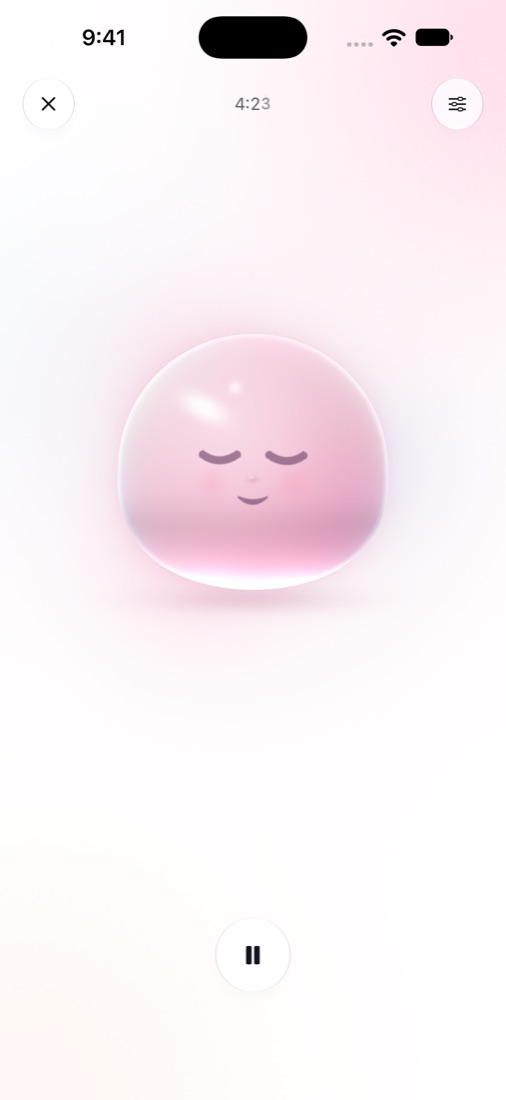
In the app
What Ephling adds
What the research says
Evidence: Moderate
A review of slow-breathing studies links breathing at about six breaths a minute or slower with more relaxation and a shift towards the body's calming side. Studies on sleep itself are still small.
Moderate: a few good studies, not yet many.
- Zaccaro A et al. How breath-control can change your life: a systematic review on psycho-physiological correlates of slow breathing. Front Hum Neurosci. 2018;12:353.
Before you start
Breathing exercises can help you wind down; they don't treat insomnia or sleep apnoea. If you snore loudly, stop breathing in your sleep, or have had trouble sleeping for weeks, talk to a doctor.
Skip breath holds if you're pregnant or have high blood pressure or a heart condition. Ephling is a wellness app, not a medical device.
Questions people ask
What is the best breathing exercise for sleep?
There isn't one best for everyone. A good start is the long exhale: in through the nose for 4, out for 7, lying down. If you like counting, try 4-7-8.
How long should I do breathing exercises before sleep?
Five to ten minutes in bed is enough. Stop counting when you feel drowsy.
Can breathing exercises cure insomnia?
No. They can help you wind down, and many people find them useful, but long-lasting insomnia needs a doctor's advice.
What is the military sleep method?
A wind-down said to be taught to pilots: relax your face, drop your shoulders and arms, breathe out slowly, relax your legs, then clear your mind for ten seconds. It's close to the face-to-feet wind-down above.
Should I breathe through my nose or mouth for sleep?
Through your nose, where it's comfortable. 4-7-8 uses the mouth only for its long breath out.
Need something else?
Close your eyes. Ephling keeps going.
Sleep sessions run with the screen locked and a calm voice leads you. Pause from the Lock Screen if you need to.
Coming soon to the App Store